
The Ultimate Guide to Visual Techniques in Film
November 18, 2026
What is a visual technique?
A visual technique is a repeatable way of shaping what the audience sees. It can be a camera move, a lens, a cut, a change of speed, something built in front of the lens or something added afterward. Each has a name, so a director can ask for a dolly zoom and the crew knows what to set up.
This guide defines 19 visual techniques that crews name often and names a film that uses each. Eighteen are among the more than 90 in the Genery library, and a short looping clip from a music video or a commercial in the library follows each of those definitions. The captions give the artist or brand, the title and the year: the clips are not from the films named in the text.
The guide sorts its nineteen into five groups by where the work is done: camera movement, camera effects (lens, focus, frame rate), editing and printing, practical effects and visual effects.
Visual techniques at a glance
| Technique | What it is | What it does |
|---|---|---|
| Tracking shot | Camera travels with the subject | Keeps a moving subject in frame |
| Dolly zoom | Dolly one way, zoom the other | Stretches or squeezes the background |
| Snorricam | Camera rigged to the actor | Fixes the actor, swings the world |
| Crash zoom | A sudden, fast zoom | Jumps from wide to close |
| Rack focus | Focus moves between subjects | Shifts attention inside a shot |
| Split diopter | Half lens over the main lens | Keeps near and far both sharp |
| Fisheye | Extreme wide-angle lens | Bends straight lines into curves |
| Slow motion | Filmed at a high frame rate | Makes an action last longer |
| Match cut | Cut between two similar shots | Links two times or places |
| Jump cut | Cut inside a continuous shot | Skips the subject forward in time |
| Wipe | New shot replaces old across a moving boundary | Marks a change of place or time |
| Freeze frame | One frame repeated | Stops the action on one image |
| Split screen | Several images in one frame | Shows actions at the same time |
| Step-printing | Frames duplicated in printing | Makes motion stutter and smear |
| Stop motion | Object moved between frames | Makes objects move by themselves |
| Slit-scan | Exposure through a moving slit | Stretches light into streaks |
| Rotating set | A room built to turn | Turns a wall into the floor |
| Bullet time | View travels around slowed action | Shows one instant from many sides |
| Morphing | One image warped into another | Transforms a face or body on screen |
Camera movement
Camera movement is any change in the camera's position or direction during a shot. Five words cover the basic moves. A pan turns the camera left or right from a fixed position, and a tilt turns it up or down. A dolly moves the whole camera toward the subject or away from it. A truck moves it sideways, and a crane raises or lowers it.
A zoom is not a camera movement: the camera stays where it is and the lens changes its magnification. A zoom enlarges near and far objects alike and leaves perspective unchanged. A dolly changes perspective: the relative sizes of near and far objects shift as the camera moves.
Tracking shot
A tracking shot is a shot in which the camera travels with a moving subject, behind it, ahead of it or beside it. The subject keeps its size in the frame while the place changes around it. In Goodfellas (1990), a Steadicam follows Henry and Karen in through the back of the Copacabana nightclub, through the kitchen and into the club. It is one unbroken shot.
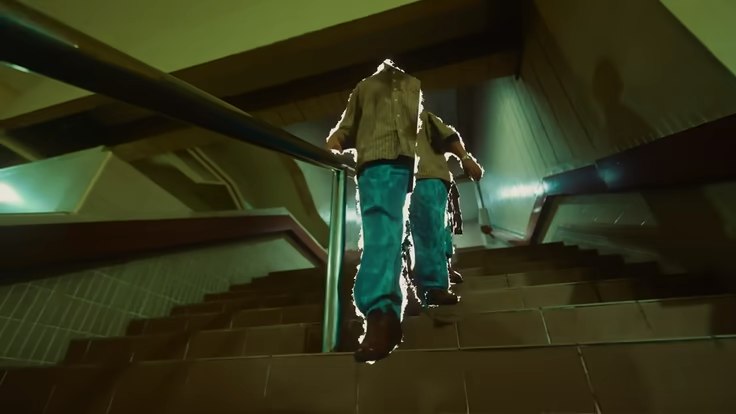
Dolly zoom
A dolly zoom (also Vertigo effect, zolly or trombone shot) moves the camera toward or away from the subject while the lens zooms in the opposite direction. The subject stays the same size, and the background stretches away or closes in around it. It first appeared in Vertigo (1958), in the view down a tower shaft that conveys Scottie's fear of heights.

Snorricam
A Snorricam (also chestcam or body mount) is a camera rigged to the actor's body and pointed back at the actor. The actor stays fixed in the frame while the surroundings swing behind. In Requiem for a Dream (2000), Darren Aronofsky straps the camera to his actors, facing them, in several scenes.

Camera effects: lens, focus and frame rate
A camera effect, or in-camera effect, is made in the camera while the shot is filmed: with the lens, the focus, the frame rate, the shutter or a filter. It is already on the original footage.
Crash zoom
A crash zoom is a zoom carried out so fast that the frame jumps from wide to close. It throws attention onto one face or one object. Quentin Tarantino uses it in Django Unchained (2012).

Rack focus
A rack focus (also focus pull) shifts focus from one subject to another during the shot, and the viewer's eye follows. In The Graduate (1967), Elaine learns of Benjamin's affair. Her blurred face comes slowly into focus as she understands that the other woman is her mother.

Split diopter
A split diopter (also split-field or split-focus diopter) is a half lens fixed in front of the main lens, so a subject close to the camera and a subject far away are both sharp in one frame. The join between the two halves shows as a blurred line. In Jaws (1975) the join is placed along vertical lines already in the frame, so the change of focus is hard to see.

Fisheye
A fisheye is an extreme wide-angle lens that bends straight lines into curves toward the edges of the frame. The Favourite (2018) was shot largely on wide-angle lenses, some of them fisheye, and its rooms bow as a result.

Slow motion
Slow motion is made in the camera by filming at a higher frame rate than the playback rate, so the action lasts longer on screen. For the shootouts of The Wild Bunch (1969), Sam Peckinpah ran up to six cameras at different speeds. The film cuts between their slow-motion and normal-speed shots.

Editing and printing techniques
Editing techniques decide where one shot ends and how the next one begins. Printing techniques change the frames of a shot after it has been filmed.
Match cut
A match cut joins two shots that share a shape, a movement or an idea, so the two images read as connected. In 2001: A Space Odyssey (1968), an early human throws a bone into the air and the film cuts to a satellite in orbit, millions of years later.

Jump cut
A jump cut removes a piece from the middle of a continuous shot, so the subject jumps forward in time while the camera position stays the same. In the car scene of Breathless (1960), the camera stays on Jean Seberg while Jean-Luc Godard cuts pieces out of the shot.

Wipe
A wipe replaces one shot with the next across a boundary that travels through the frame. The boundary can be a straight edge, a shape such as a growing circle (an iris wipe) or the sweep of a clock hand, or a person crossing the frame. Neither image slides: only the boundary moves, and the action in both shots keeps playing. Star Wars (1977) uses wipes, in many directions, to move between its storylines.

Freeze frame
A freeze frame repeats a single frame, so the action stops on one still image. The 400 Blows (1959) ends on a freeze frame: Antoine runs to the sea, and the image stops on his face as he looks into the camera.

Split screen
A split screen divides the frame into two or more images shown at the same time. In the climactic prom scene of Carrie (1976), Brian De Palma holds a close-up of Carrie's face in one part of the screen. Another part shows the doors closing and her tormentors starting to panic.

Step-printing
Step-printing duplicates individual frames when the film is printed. The duplication changes the speed of the movement and makes it stutter. In Chungking Express (1994), Wong Kar-wai uses it to stretch and compress time: a character who holds still stays readable while the crowd around them blurs into streaks. The technique runs through Wong's films and is one of his trademarks.

Practical effects
A practical effect is made physically and photographed, not generated in a computer.
Stop motion
Stop motion photographs an object one frame at a time and moves it slightly between frames, so the object appears to move by itself when the frames run. Willis O'Brien animated the giant ape of King Kong (1933) in stop motion, and the film combines that animation with its live actors.

Slit-scan
Slit-scan photographs the subject through a narrow slit that moves during the exposure, which stretches light and artwork into streaks. Douglas Trumbull adapted the process for the Star Gate sequence of 2001: A Space Odyssey (1968), which needed a machine built for the purpose.

Rotating set
A rotating set is a room built to turn around the actors, so that a wall or the ceiling becomes the floor. The hotel fight in Inception (2010) was filmed in a corridor built to rotate.
Visual effects
A visual effect (VFX) is created or changed after the shoot, today mostly in software.
Bullet time
Bullet time slows or freezes the action while the point of view travels around it. It is half practical. For the shot in The Matrix (1999) where Neo dodges bullets, rigs of still cameras photographed the actor in sequence. Software then interpolated frames between the stills to smooth the move.

Morphing
Morphing turns one image into another by distorting the first while it fades into the second, with matching points marked on both. A dissolve only fades one image into the other and warps nothing. Willow (1988) has an early digital morphing sequence, and Terminator 2: Judgment Day (1991) built a character on the technique, the shape-changing T-1000.

What crews call these techniques
Crews use three more sets of names that do not appear above:
- Dolly toward the subject: push in. Dolly away from it: pull out.
- A long unbroken take, such as the Copacabana shot: a oner.
- Slow motion shot in the camera: overcranked. Fast motion shot in the camera: undercranked.
How to find a reference for a technique
Search by the technique's name, and collect clips, not stills. Most techniques are a movement or a cut, and a single frame shows neither.
- Find the name. If you only have a description, such as "the background stretches behind the actor", use the table above to turn it into a name.
- Collect two or three examples from different productions, so you can tell the technique from one director's way of using it.
- Note three things in each example: where the camera starts and ends, how long the move lasts, and what the subject does during it. A crew needs those to repeat the shot.
- Put the examples on one board next to the scene they are for, so the director, the cinematographer and the editor look at the same clips.
What is the Genery visual technique library?
The Genery visual technique library is a catalog of more than 90 techniques at genery.io/effects, each with a page of shots that use it. Every shot plays as a clip. The clips in this guide come from those pages. The library sorts its techniques its own way, into seven groups: Camera, Angles, Frame, Staging, Time, Transitions and Effects. Where the library has a page for a technique in this guide, the technique's name above links to it.
A technique page opens with a short description and continues with the shots.
Without an account you can read every description and watch up to 40 shots of each technique. A free account opens the rest and lets you save shots to public boards. Genery Pro costs $8.33 a month billed annually or $12.95 billed monthly, with a 7-day free trial. Pro adds search filters, the technical specifications of a frame, high-resolution downloads, GIF and MP4 export and private boards.
To search inside the library, type a subject or a mood into the search field while the Techniques filter is on. The results come from every technique.
Questions and answers
What is the difference between a camera movement and a camera effect?
In a camera movement the camera itself travels or turns. In a camera effect it can stay where it is: the lens, the focus, the frame rate, the shutter or a filter changes the picture as it is recorded. A tracking shot is a movement. Slow motion, a fisheye image and a split diopter shot are camera effects. A dolly zoom is both, because the camera moves while the lens zooms.
Are practical effects and visual effects the same thing?
No. A practical effect exists in front of the camera when the shot is taken, and a visual effect is added to the picture later. Stop motion and a rotating set are practical effects. Morphing is a visual effect. Bullet time in The Matrix used both: still cameras on the set and computed frames afterward.
Which visual techniques are made in the edit?
The match cut, the jump cut, the wipe, the freeze frame, the split screen and step-printing are made after the shoot, in the edit or in printing. A match cut still has to be planned on the shoot, because both shots must share a shape or a movement.
Where can I watch examples of one technique?
At genery.io/effects. Choose a technique there, and its page shows shots from released work that use it, each playing as a clip. A visitor without an account can watch up to 40 shots of a technique.